Are Wall Mount Garage Door Openers Better?
Wall mount garage door openers are better when you need clear ceiling space and your door has a compatible torsion spring setup. They aren't a fit for every door, so check the hardware and installation requirements first.
On this page (6 sections)
Wall mount garage door openers are better when you need clear ceiling space and your door has a compatible torsion spring setup. They attach beside the garage door, leaving the ceiling open and potentially reducing noise and vibration from an overhead motor.
That space-saving design has limits. A wall mount opener must match your door hardware and installation conditions, so compare fit and access before choosing one over a ceiling mounted opener.
Are wall mount garage door openers better for your garage?
Choose a wall mount opener if freeing ceiling space is a priority and your door is compatible. It can suit a garage where overhead storage, tall vehicles, or a clear ceiling matters.
Wall mounting also moves the motor away from the ceiling. Chamberlain and LiftMaster describe quieter operation with reduced vibration, which may matter when living areas sit near the garage.
The tradeoff is that fit depends on the door's spring and track arrangement. Some models exclude certain spring types or door designs, and they may need a nearby outlet.
For a broader look at drive types and installation needs, see our garage door opener buying guide.
What do wall mount openers do differently?
A wall mount, often called a jackshaft opener, mounts beside the garage door rather than on an overhead rail. It operates the door through compatible hardware at the torsion spring shaft.
Because there is no opener rail across the ceiling, the area above the vehicle can remain open. A wall mount model still needs room beside the door for the unit and its installation requirements.
A ceiling mounted trolley opener uses a rail connected to the door and a motor mounted overhead. Compare both arrangements in our guide to jackshaft vs trolley garage door openers.
Do wall mount openers make a garage quieter?
They can reduce motor noise and vibration transmitted through the ceiling, since the motor is mounted to the wall beside the door. The door itself can still make noise from its rollers, hinges, tracks, or spring system.
If your main goal is quieter operation, check the whole door system before replacing the opener. Our guide to making a garage door opener quieter covers other sources of noise and practical checks.
What door setup does a wall mount opener need?
Check the opener's compatibility requirements against your door before buying. Wall mount models commonly rely on a torsion spring arrangement, and model restrictions can rule out some doors.
For example, Genie says its B6172H does not work with reverse wound springs, extension springs, one-piece doors, or low-headroom outside hookup setups. LiftMaster's 98022 requires a front mount torsion bar system and excludes roll-up doors, low-headroom track, and Wayne Dalton Torquemaster systems.
These differences make a visual guess unreliable. If you cannot identify your spring or track setup, ask a qualified garage door professional to confirm compatibility.
Can you install a wall mount opener yourself?
Installation depends on the model, the door setup, and your experience with garage door systems. Follow the manufacturer's instructions and use a qualified installer if you are not sure how to assess the spring shaft or mount the unit safely.
A wall mount opener is not simply an overhead opener moved to the side. Check mounting space, power access, door compatibility, and any included safety controls before planning the work.
What are the tradeoffs of wall mount garage door openers?
The main benefits are open ceiling space and the potential for less ceiling-transmitted noise and vibration. The main tradeoffs are stricter compatibility requirements and the need for suitable wall space and power access.
A wall mount opener may be a poor fit if the door uses an excluded spring system, if the required mounting area is blocked, or if a nearby outlet is unavailable. Some models also add features such as app control or battery backup, but those are model-specific.
For a side-by-side look at common opener designs, start with types of garage door openers and who each one suits. If you are focused on ceiling space, compare models in our best jackshaft garage door openers guide.
Which wall mount opener features may matter?
Prioritize compatibility first, then compare backup power, controls, and lighting. These features can shape the choice once you know the opener suits your door.
The Chamberlain Wall Mount myQ opener with battery backup combines a wall mounted design with integrated backup power, myQ app control, and remote LED lighting.
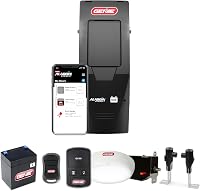
The Genie B6172H wall mount smart opener includes battery backup and Aladdin Connect controls. Genie says it works with Alexa, Google Assistant, SmartThings, and other smart home platforms, and it needs a standard outlet within 6 ft.
The LiftMaster 98022 Premium Series jackshaft opener includes myQ and a wall mounted design. Its front mount torsion bar requirement makes a door hardware check essential.
The Genie 6072H-B wall mount opener includes battery backup, a wireless wall console, and an automatic door lock. Genie describes it as a compact wall mounted design that clears overhead space.
Are wall mount garage door openers worth choosing?
They are worth considering when your door is compatible and you will use the open ceiling space. The design may also suit you if reducing overhead motor noise and vibration is a goal.
Choose a ceiling mounted opener if its rail arrangement fits your garage and wall mounting requirements are a poor match. Choose a wall mount model when space above the door matters, then confirm spring compatibility and outlet access before ordering.
For more model comparisons, see our guide to Genie vs Chamberlain wall mount openers. For the myQ model specifically, read our Chamberlain wall mount myQ opener review.
Frequently asked questions
Are wall mount garage door openers better than ceiling openers?
Wall mount openers can be better if you want to free ceiling space or reduce noise and vibration from an overhead motor. They need compatible door hardware and an appropriate installation location, so they are not a universal upgrade.
Compare your door setup, ceiling needs, power access, and budget before choosing.
Do wall mount garage door openers work with every garage door?
No. Wall mount models have door and spring requirements, and some exclude reverse wound springs, extension springs, one-piece doors, or certain low-headroom setups.
Check the exact opener's compatibility instructions and have a qualified installer assess the door if you are unsure.
Are wall mount garage door openers quieter?
They can reduce noise and vibration because the motor mounts beside the door instead of hanging from the ceiling. The door, rollers, tracks, and hardware also affect the sound you hear, so a wall mount opener cannot make a noisy or poorly maintained door quiet by itself.
Do wall mount openers need an outlet nearby?
Many models need a nearby standard outlet, and the required distance varies. For example, Genie says its B6172H needs an outlet within 6 ft.
Check the model's installation instructions and outlet location before choosing an opener or planning electrical work.