Side Mount vs Overhead Garage Door Opener: Which Fits? (November 2026)
Pick a side mount opener when ceiling space is tight and the door meets its weight and height limits; pick an overhead opener when the ceiling is clear and you want the widest door compatibility. In this side mount garage door opener vs overhead comparison, the Genie 6072H-O wall mount wins for most small or busy garages, while overhead units remain the safer default for heavy or unusual doors.
On this page (9 sections)
- Side mount vs overhead: which fits your ceiling and parking?
- Which type is easier to install?
- Which opener runs quieter?
- Which doors and weights does each type handle?
- How do controls and accessories differ?
- Which type fits a small or cluttered garage?
- How much do parts and upkeep matter?
- Who should buy which?
- Verdict: which opener fits most garages?
Pick a side mount opener when ceiling space is tight and the door meets its weight and height limits; pick an overhead opener when the ceiling is clear and you want the widest door compatibility. In this side mount garage door opener vs overhead comparison, the Genie 6072H-O wall mount wins for most small or busy garages, while overhead units remain the safer default for heavy or unusual doors.
A side mount opener attaches to the torsion spring at the side of the door and turns the bar directly. An overhead opener hangs a rail and powerhead from the ceiling and pulls the door with a trolley.
That one difference in mounting changes ceiling space, installation work, noise and the range of doors each type can drive. The comparison below walks through each point so you can match the opener to your garage.

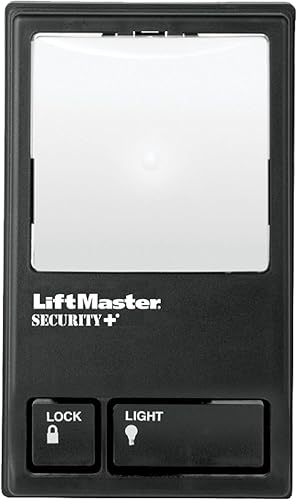 Best for LiftMaster Security+ 2.0 setups
LiftMaster 78LM Wired Wall-Mounted Garage Door Opener
Side mount vs overhead: which fits your ceiling and parking?
A side mount opener wins when you need the ceiling area for storage or a taller vehicle; an overhead opener needs clear space above the door. Measure the ceiling before you pick a type.
The Genie 6072H-O mounts to the side of the torsion spring. It measures 6.8 in wide x 14.5 in tall x 9 in deep, so it takes a slim spot beside the door instead of a long rail across the ceiling.
An overhead opener runs its rail from the powerhead at the back of the garage to the door. That rail and motor sit above the car, so anything tall parked there must clear them.
If your garage already holds bikes, boxes or a roof box hanging from the joists, the wall mount keeps that space open. If the ceiling is bare and the door clears, an overhead unit costs less and fits more doors.
When the ceiling is the deciding factor
Low headroom is the classic reason to look at a wall mount. An overhead rail needs room above the door's travel, and a tight ceiling can leave little space for the powerhead.
The Genie unit also frees the spot above the cars for storage or a taller vehicle. That matters in a one-car garage where every inch counts.
Check the outlet before you commit. The Genie needs a standard outlet within 6 ft of the opener, so a garage without one near the spring means adding power first.
Reading the ceiling measurements
The Genie needs just 2.5 in above and 7 in to the side of the spring tube. That small clearance is why it fits in corners where a full overhead rail cannot go.
An overhead opener needs a straight run of ceiling from the door to the motor. If a beam, duct or low joist cuts across that line, the rail has nowhere to sit.
Measure from the spring tube to the nearest wall and to the outlet, then measure the clear ceiling path above the door. Those three numbers tell you which type your garage can take.
Which type is easier to install?
An overhead opener is usually the simpler first install because its rail follows a standard path above the door; a side mount needs careful work around the torsion spring. Skill and spring tension decide the real difficulty.
The Genie wall mount only needs 2.5 in above and 7 in to the side of the spring tube for mounting. That small footprint sounds easy, but the spot sits beside the torsion spring, which stores a lot of energy.
Overhead openers still need correct door balance, a proper header bracket and a straight rail. The work is well documented and most handy homeowners can follow the steps.
The spring-side job is the hard part
Mounting to the torsion bar means working near the spring and its cables. The Genie 6072H-O monitors cable tension with its Safe-T-Pulse system, which pulses during initial door travel.
That safety system helps once the unit is running. It does not remove the need to handle the spring carefully during the install.
If you are not comfortable with torsion springs, budget for a technician on the wall mount. An overhead install is the friendlier first project for a confident do-it-yourselfer.
Tools and wiring each type asks for
The Genie kit includes a wireless wall console, so the opener itself needs power, not a long control wire. The outlet within 6 ft is the main wiring job.
A wired wall control changes that. The LiftMaster 78LM needs a bell wire run up the wall and across the ceiling to the motor unit, secured with insulated staples and stripped 7/16 in at the end.
If you add a wired panel to a wall mount or an overhead opener, plan that wire run before you close up the walls. It is easier to staple the wire in place while the ceiling is still open.
Which opener runs quieter?
A side mount opener is generally quieter because it drives the torsion bar without a long rail and trolley. An overhead opener's rail can carry motor vibration into the ceiling.
The Genie 6072H-O turns the spring bar directly. With no rail across the ceiling, there is less metal to rattle and less vibration to send into the rooms above.
An overhead opener is not automatically loud. A belt drive overhead model softens the pull and cuts noise a lot compared with a chain drive.
If a bedroom sits over the garage, noise matters more than price. Our chain vs belt drive garage door opener comparison explains how the drive type changes the sound an overhead unit makes.
Noise and the rooms above
A wall mount still makes some sound, and the door itself rattles as it moves. The opener type is only one part of a quiet garage.
Check the door's rollers and hinges too. A worn roller can undo the benefit of a quiet opener, whichever type you choose.
Which doors and weights does each type handle?
Overhead openers cover the broadest range of doors; the Genie wall mount is limited to sectional doors up to 850 lb and 14 ft tall. Check your door's weight and type before you choose.
The Genie 6072H-O lifts heavy residential garage doors up to 850 lb. It works with standard, high-lift and vertical-lift sectional doors up to 14 ft tall and covers up to 180 sq ft.
An overhead opener handles sectional doors too, and some models suit one-piece tilt doors. That flexibility is why overhead units remain the default for unusual or older doors.
A side mount opener needs a torsion spring to attach to. A door without one, such as a one-piece tilt door, cannot use the Genie wall mount.
Matching the opener to your door
Weigh the door or check its label before you buy. A door above 850 lb rules out the Genie wall mount and points you to a heavier overhead unit.
Check the door's height as well. A door over 14 ft tall needs a different opener, so measure before you order.
If your door is a standard sectional under the limits, the wall mount fits. If it is heavy or one-piece, the overhead type is the safer pick.
How do controls and accessories differ?
Both types use wall controls and remotes, but the accessories must match the opener brand and model. The control you pick depends on which opener you install.
The Genie 6072H-O comes with a wireless wall console, a wireless LED light, an Intellicode remote and a remote door lock. That covers the main controls in one box.
An overhead opener usually includes a wall console and remote too. Extra keypads and panels must match its brand, so check compatibility before adding one.
Picking controls for a wall mount
The Genie kit already includes its wireless console, so you rarely need a separate panel. If you want a wired panel for a LiftMaster Security+ 2.0 opener instead, the LiftMaster 78LM fits that system only.
Adding keyless entry to an overhead opener
An overhead setup often grows with a keypad so the whole household can get in without a remote. The Soobool keypad fits many Overhead and Genie Intellicode models and mounts without wiring.
A panel for Overhead Door Series II
If you run an Overhead Door Series II opener, a matching wall console keeps the controls consistent. The Series II console is backlit and adds a vacation lock.
Which type fits a small or cluttered garage?
A side mount opener suits a small or cluttered garage best because it gives back the ceiling. An overhead opener eats the space above the car and can crowd storage.
In a one-car garage, the area above the hood is often the only free spot. A wall mount keeps that spot open for shelves or a roof box.
An overhead opener's rail runs down the middle of the ceiling. Hanging storage has to work around it, and a tall vehicle may not fit beneath the rail and powerhead.
Planning storage around each type
With a wall mount, you can run shelves along the ceiling and keep the middle clear. The opener sits beside the door, out of the way.
With an overhead opener, plan storage to the sides of the rail. Keep the center path clear so the door and trolley can move without hitting anything.
Check the door's travel path either way. Storage must not block the door as it rises or the tracks as it rolls.
How much do parts and upkeep matter?
A side mount opener has fewer moving parts in the door path, while an overhead opener's rail and trolley add wear points to check. Routine care keeps either type working.
The Genie wall mount skips the rail and trolley. Its main wear points sit at the motor and the torsion bar connection.
An overhead opener adds a rail, a trolley and a chain or belt to check. Those parts need occasional lubrication and tension checks.
What to inspect on each type
For the wall mount, look at the mounting bolts and the spring-side connection. The Safe-T-Pulse system watches cable tension, but a visual check still helps.
For an overhead unit, check the rail, the trolley and the drive chain or belt. A loose chain or a worn trolley shows up as a jerky or noisy door.
Either type benefits from a balanced door. A door that binds puts extra strain on the opener and shortens its life.
Warranty coverage as an upkeep cue
The Genie 6072H-O carries a limited 15 year motor warranty and a 5 year parts warranty. Those terms tell you where the maker expects the long life to sit and where parts may need attention first.
When you compare overhead models, read their warranty terms the same way. A long motor warranty paired with a short parts warranty means the drive parts are the ones to watch.
Who should buy which?
Buy the Genie 6072H-O wall mount for a small, low-ceiling or storage-heavy garage with a sectional door under 850 lb; buy an overhead opener for a heavy, tall or one-piece door. Your door type and ceiling space decide the fit.
Choose the wall mount when the ceiling is the bottleneck. It clears the overhead area and adds a quiet, compact unit beside the door.
Choose an overhead opener when the door is heavy, tall or not a sectional. Overhead units cover more door types and suit a garage with a clear ceiling.
Either way, read the garage door opener buying guide to weigh drive type and power before you commit. It helps you match an opener to your door and habits.
Verdict: which opener fits most garages?
For most tight or busy garages with a standard sectional door, the side mount garage door opener vs overhead call goes to the Genie 6072H-O wall mount. It clears the ceiling, runs quiet and stays within a common door weight and height range.
Its 850 lb and 14 ft limits are the catch. If your door is heavier or one-piece, an overhead opener is the safer choice.
Check three things before you buy: the door's weight and type, the ceiling clearance and the outlet position. That quick check points you to the right type.
When you are ready to compare full models, our list of the best garage door openers covers the top overhead and wall mount picks. Our guide to the best type of garage door opener helps if you are still deciding between drive styles.
Frequently asked questions
Does a side mount opener work on a one-piece garage door?
No. The Genie 6072H-O is made for sectional doors, so a one-piece tilt door needs a different opener.
Check your door type before you buy a wall mount unit, since the torsion spring setup it attaches to only exists on sectional doors.
Can you install a side mount opener yourself?
The Genie unit needs 2.5 inches above and 7 inches beside the spring tube, plus a standard outlet within 6 ft. That position works around torsion spring tension, so many households hire a garage door technician for the mounting and spring-side work.
Why are wall mount openers often quieter than overhead ones?
A wall mount opener turns the torsion bar directly and skips the long rail and trolley an overhead opener uses. Fewer moving parts between the motor and the door usually mean less noise and vibration in the rooms above the garage.
Does a side mount opener free up space for a car top carrier?
Yes. The Genie 6072H-O removes the rail and powerhead from the ceiling, so the area above the cars stays clear.
That space can hold storage racks, a car top carrier or a taller vehicle, as long as the door and tracks still have clearance.


